10 Aug 2026 · 6 min read
Energy-Based Planning for ADHD: Why Traditional Planners Fail (and What Works)
Traditional planners fail a lot of ADHD brains. Energy-based planning matches tasks to your energy levels instead of the clock. Here is how it works, how to build an ADHD-friendly planning habit, and what makes an ADHD planner actually stick.
- adhd
- planner
- energy-based
- productivity
- executive function
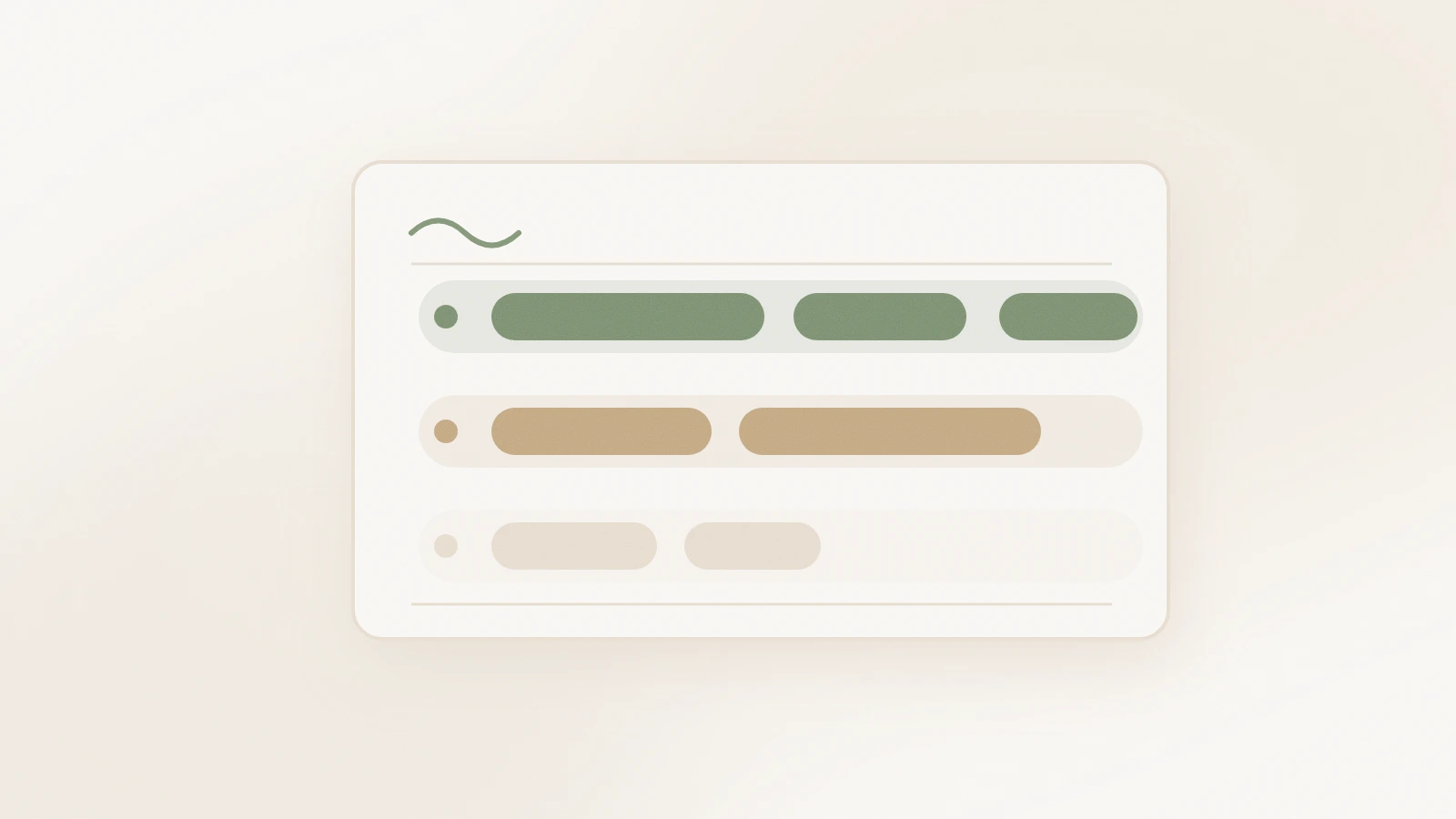
If you have an ADHD brain, you have probably bought a planner you never opened past the first week. That is not a character flaw. Most planners are built for someone with steady energy and a tidy relationship with time, and that is not how ADHD works. Energy-based planning flips the whole thing around: instead of scheduling your life by the clock, you plan around your energy levels. This guide covers what that means, why traditional planners fail people with ADHD, how to build an ADHD-friendly planning habit, and what actually makes an ADHD planner stick.
What is ADHD, and how does it affect daily planning?
ADHD, attention deficit hyperactivity disorder, is a difference in how the brain handles attention, time and follow-through. That last part, executive function, is the engine behind planning, and it is exactly where ADHD makes life harder. In practice, daily planning with an ADHD brain runs into three things:
- Time blindness. Time does not feel evenly spaced, so a neat hourly grid is quietly meaningless.
- A to-do list that never shrinks. Tasks get added faster than they get crossed off, and the list becomes a monument to everything you have not done.
- Energy that swings. One hour you are in deep work and unstoppable, the next you cannot start a two-minute admin task. Your energy patterns, not the clock, decide what is actually possible.
None of this is a willpower problem. It is a wiring difference, and the fix is to plan with that wiring instead of against it.
Why traditional planners fail ADHD brains
Standard planners make a few assumptions that quietly sabotage people with ADHD:
- They assume consistent energy. A 9am slot labelled “deep work” is useless if 9am is a low-energy morning.
- They run on guilt. Streaks, checkboxes and daily spreads turn one missed day into evidence that you failed, so the planner becomes something you avoid.
- They bury the important stuff. A long, flat to-do list gives a five-minute reply the same visual weight as a project, so your brain cannot tell what matters.
- They pile on decisions. Rigid time blocking asks you to predict the whole day in advance, which stacks up decision fatigue before you have even started.
The result is familiar: a beautiful planner, used for four days, abandoned in a drawer. The planner failed you, not the other way around.
What is energy-based planning?
Energy-based planning, sometimes called energy management or energy-based scheduling, means you match the task to your energy level instead of to a time on the clock. You learn your personal energy patterns, the natural energy curve across your day, and you work with your energy instead of against it. ADHD energy is variable by nature, and planning around that energy variability is the whole point.
A simple way to think about it is in three energy states across a workday:
- High-energy (high-voltage) windows. This is when deep work and hyperfocus are possible. Protect these for the hard, brain-heavy tasks that actually move things.
- Medium-energy windows. Good for steady, moderate tasks: meetings, errands, the middle of a project.
- Low-energy (low-battery) windows. Not a failure, just reality. This is when you do low-stakes admin, reset your space, or rest, rather than fighting a task your brain cannot hold.
Instead of asking “what time is it, and what is scheduled,” you ask “how much battery do I have, and what fits that.” A high-energy morning gets deep work. A low-energy afternoon gets the admin pile and a couple of easy reminders. The same to-do list, aimed at the right moment.
How to build an ADHD-friendly, energy-based planning habit
You do not need a complex system. You need a low-friction one you will actually reach for. Here is a starting routine:
- Do an energy check-in first. Before you plan the day, name your battery level. High, medium, or low. This one question reframes everything that follows.
- Brain-dump before you plan. Empty every task, idea and “do not forget” onto the page so your working memory can let it go. Planning comes after the dump, not during.
- Sort tasks by energy required, not by time. Tag each item as deep work, medium, or low-energy admin.
- Match tasks to windows. Put your high energy tasks, the deep work, in your high-energy window, and batch the low energy admin into a quieter slot. This priority-based match is how energy-based planning turns into real productivity instead of just a longer to-do list.
- Cap the list. Pick one big thing, three medium, five small. Limiting daily commitments is a time management move that forces the prioritising ADHD makes hard, and it helps you stay organized without a rigid schedule.
- Externalise memory with reminders. A reminder or a written prompt is not cheating, it is how you stop relying on a brain that drops things.
- Use body doubling for hard starts. Working alongside someone else, in person or on a video call, makes starting far easier. Save it for the tasks you keep avoiding.
Do this for a week and adjust. The goal is a planning habit that bends with your energy, not one that breaks the first time you miss a day.
What actually makes an ADHD planner work?
If you are shopping for planners for ADHD, ignore the aesthetics and look for these traits. An ADHD planner works when it is:
- Low-friction. If it takes effort to use, you will not use it. Simple beats clever.
- Shame-free. No streaks to break, no red marks for a missed day. A missed day is just Tuesday.
- Flexible and undated. Undated pages mean you can start again any day without wasting the “wrong” dates.
- Energy-aware. Space to plan by energy, not just by hour.
- Visible, with room to dump. A brain-dump area and, ideally, a dopamine menu of quick wins for low-energy moments.
If a planner punishes you for being human, it will end up in the drawer. If it meets your brain where it is, you will keep coming back.
The planner we built for this
This is exactly why we made the No-Shame Planner: an undated, energy-based planning tool with a brain-dump space and nothing that turns red when you miss a day. It is built for the way ADHD brains actually plan, not for a neurotypical ideal. If you want the wider picture, it sits alongside the rest of our honest ADHD toolkit for adults, and it pairs well with simple time-management tools like a visual timer.
Frequently asked questions
Do ADHD planners actually work? They can, but only the right kind. A rigid, guilt-driven planner tends to fail ADHD brains. A low-friction, energy-based, shame-free planner works because it fits how your attention and energy actually move. The best ADHD planner is simply the one you will keep using.
What are the benefits of an ADHD planner? A good one externalises your memory so you stop holding everything in your head, matches tasks to your energy so you are not fighting a low-battery moment, and caps overwhelm by showing you what matters most today. Over time, a calmer, energy-aware system supports steady ADHD productivity and even emotional regulation, because you are no longer failing against an impossible schedule every day.
How do I start with energy-based planning? Start tiny. Tomorrow morning, do a one-line energy check-in, brain-dump your tasks, and slot the hardest one into your highest-energy window. That is the whole method in miniature. Build from there.